
The Rittenhouse Residential Revolution, 186 Years in the Making
With nearly 2,000 new apartments in the pipeline, the Center City District’s 2026 Real Estate Report proves what Rittenhouse has always known: rooftops are what makes a neighborhood thrive.
When James Harper—retired congressman, merchant, and, apparently, an excellent judge of real estate—built the first house facing Rittenhouse Square in 1840, he set something in motion that’s still playing out 186 years later. He chose a spot surrounded by dense woods that the city was literally using as animal pasture. No coffee shops, no shopping, not even a paved road for a horse. Just trees, goats, and one guy who looked at all of it and said, “Yep, this is the spot.”
Turns out, he was onto something.

The Center City District just dropped their 2026 Real Estate Development Report, and the headline numbers are pretty damn big: $2.14 billion in completed and under-construction projects across Center City, over 8,200 residential rental units in the pipeline, AND a 27% population increase since 2011. Basically, one in eight Philadelphians now calls Center City home.
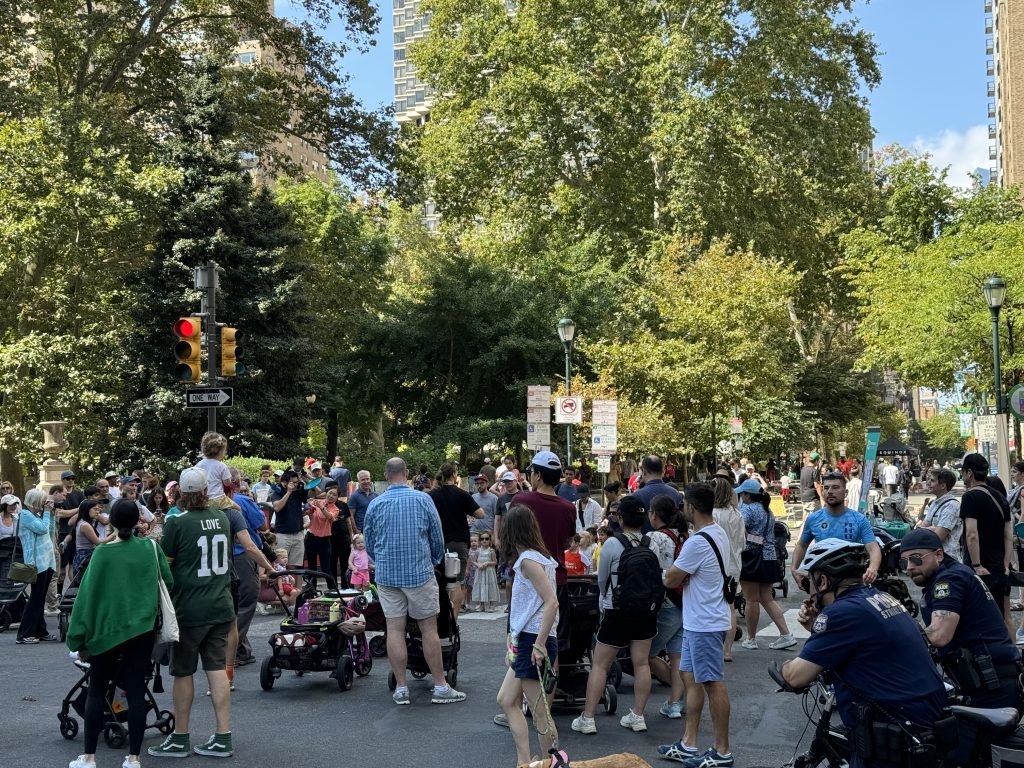
But here’s what makes this a Rittenhouse story: while the rest of downtown spent the mid-twentieth century becoming an office district, Rittenhouse never stopped being a place where people actually live. When Victorian mansions were demolished, they were replaced by condos and co-ops, not office towers. While Market Street went full corporate, and City Hall’s surroundings filled with glass-walled workplaces, the center of Rittenhouse kept its residential roots.
Think of it like Field of Dreams but in reverse — Rittenhouse didn’t build a baseball diamond and hope people would show up. People showed up first, and everything else followed. The restaurants, the boutiques, the 46,129 daily pedestrians on Walnut Street (up 9% year-over-year!) — that’s not commuters rushing to cubicles. That’s locals walking to dinner.
And now it appears that finally, the rest of the city is starting to figure this out.
The Rittenhouse Pipeline: Nearly 2,000 New Neighbors
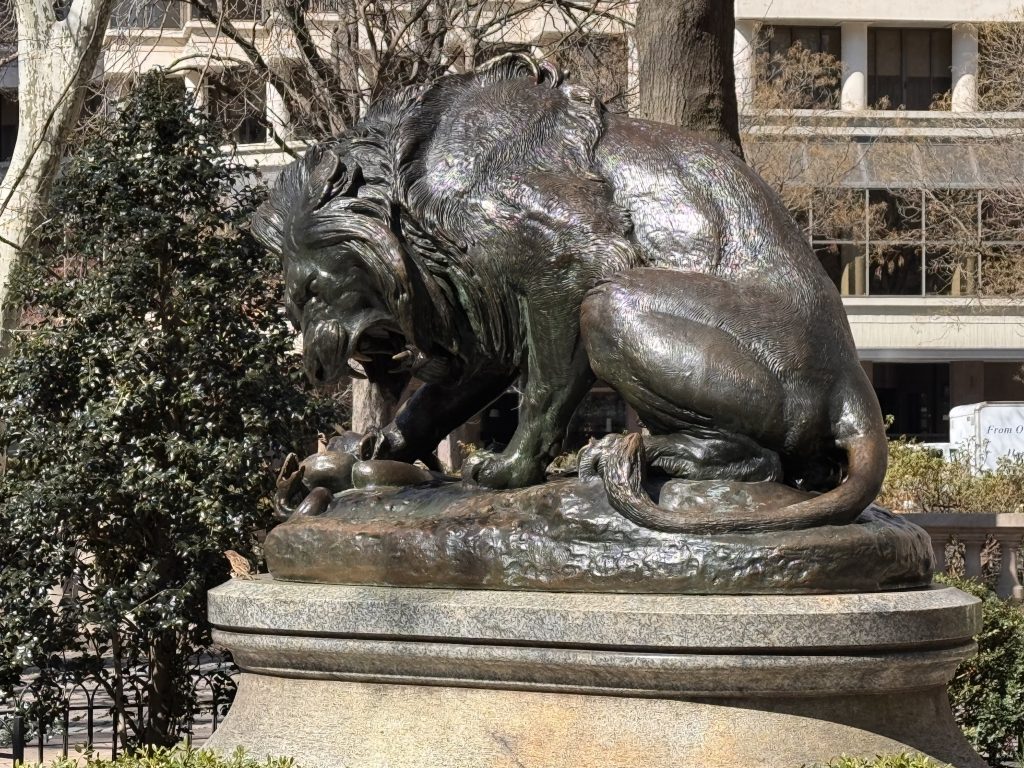
Let’s walk through what’s happening within walking distance of the “lion crushing the serpent” statue.
Harper Square 2 | 📍 113-121 South 19th Street
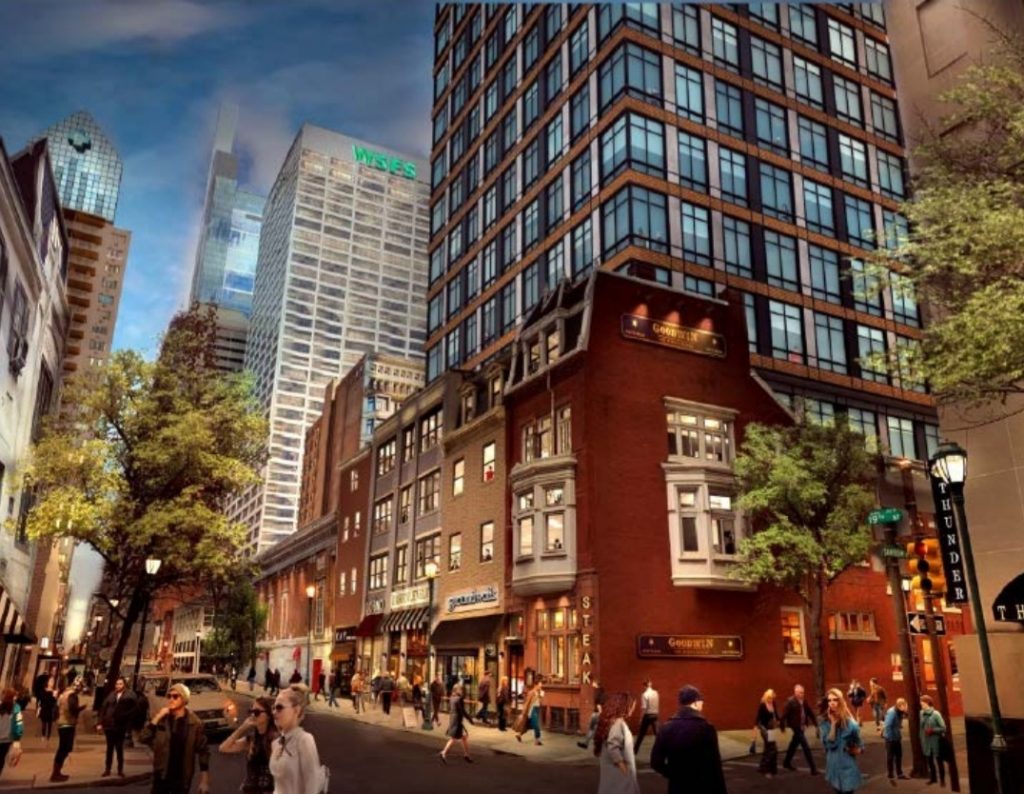

This is a marquee project, and we’re SUPER excited to track it. Pearl Properties is building a 500-plus-foot tower with 267 luxury rental apartments — and when it tops out, it’ll be the tallest rental building in Philadelphia. 75% of the units will have private balconies, plus there’s 15,000 square feet of retail at the base. Site work kicked off in mid-December, with completion targeted for spring 2028.
For context — Pearl Properties’ earlier building on this same block, The Harper, was 24 stories. Harper Square will more than double that.
The Josephine |📍1620 Sansom Street
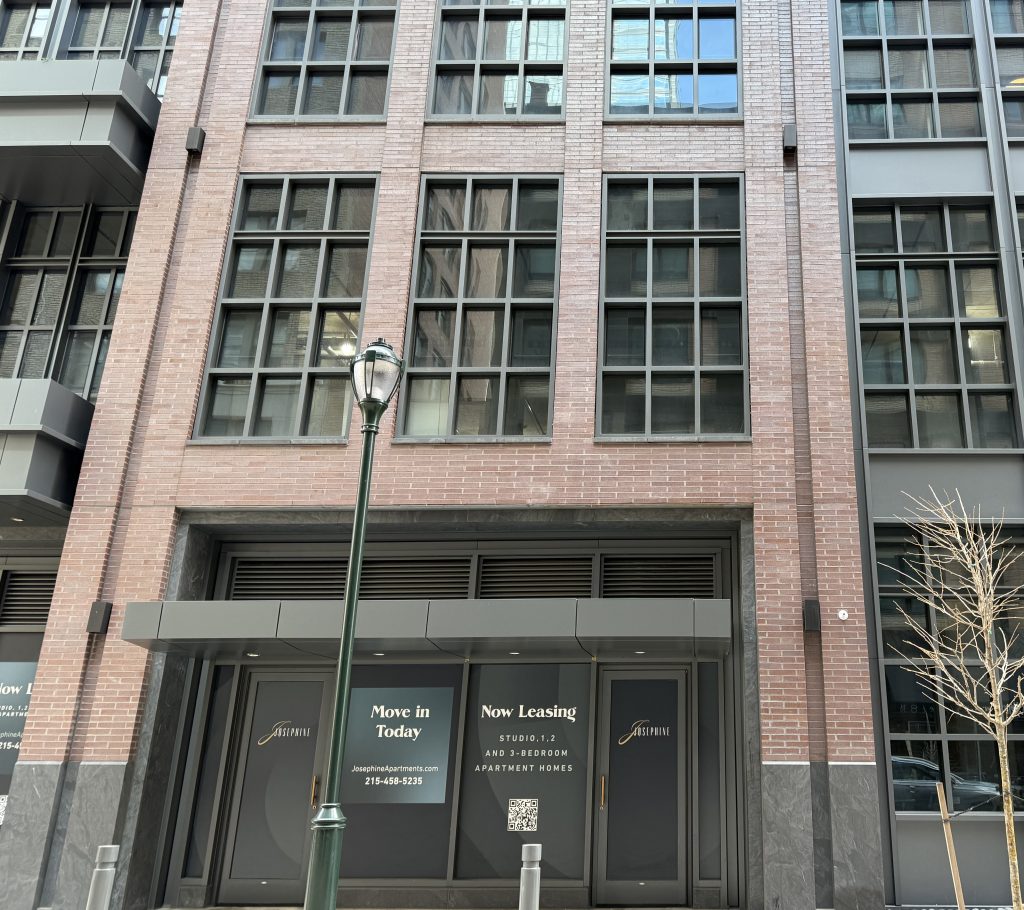

Open for a while now, The Josephine is a 27 stories high and 254 apartment Southern Land Company project that landed right in the thick of Sansom Street. And at street level? Uchi, the acclaimed Japanese restaurant that traveled all the way from Austin to Rittenhouse. Like a true Samantha in Sex & the City, they delivered exactly what was promised — and that connection between residential density and premium dining is no coincidence. Rooftops create demand, and Uchi showing up on Sansom Street is proof.
1500 Pine |📍1500 Pine St
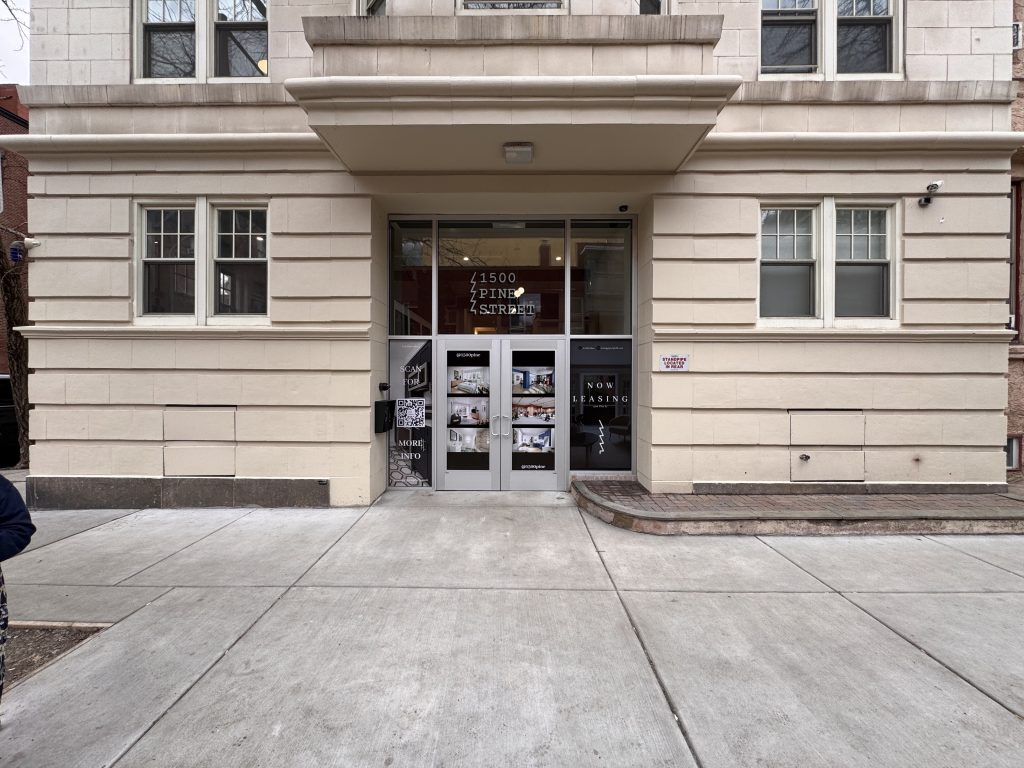
MM Partners pulled off something quietly remarkable at 1500 Pine — they converted a ten-story, 1921-built former University of the Arts dormitory into 66 boutique apartments. Studios, one-bedrooms, and two-bedrooms that are commanding some of the highest per-square-foot rents in the neighborhood. Move-ins began in October 2025.
The backstory is the kind of thing that makes real estate nerds do a double-take: MM Partners acquired the building off-market for $10.7 million in late 2022 — well before UArts’ sudden closure in 2024. They saw the opportunity before anyone else did. Basically the Moneyball of Rittenhouse real estate.
2012 Chestnut Street, aka The One We’ve Been Tracking Closely
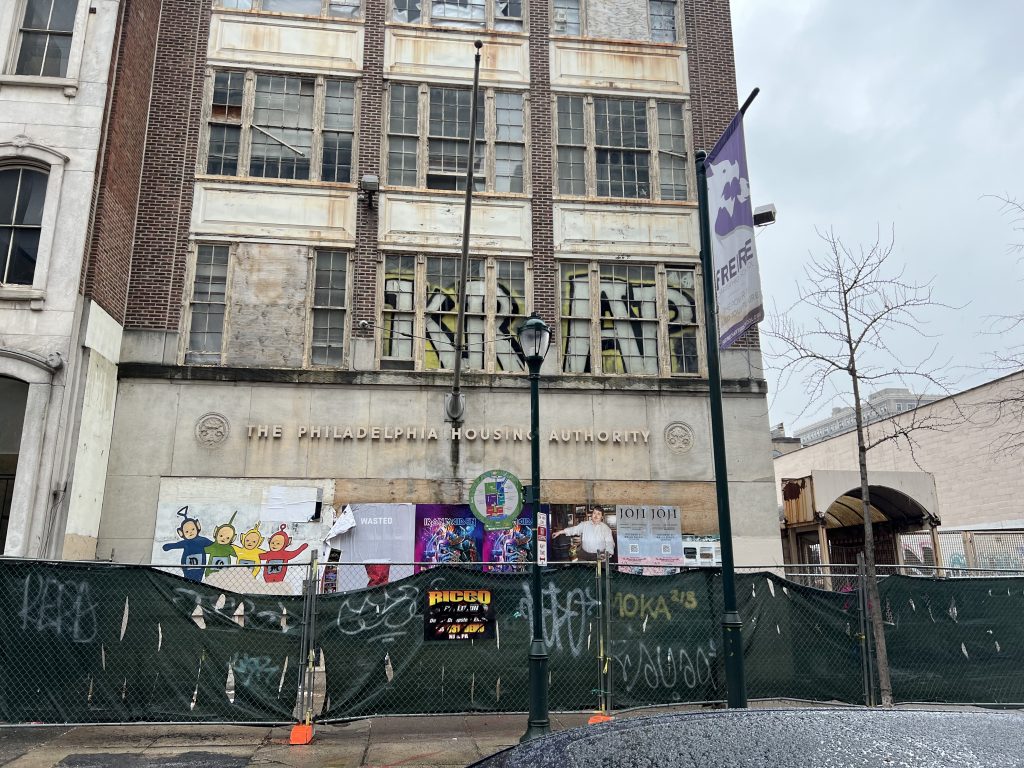
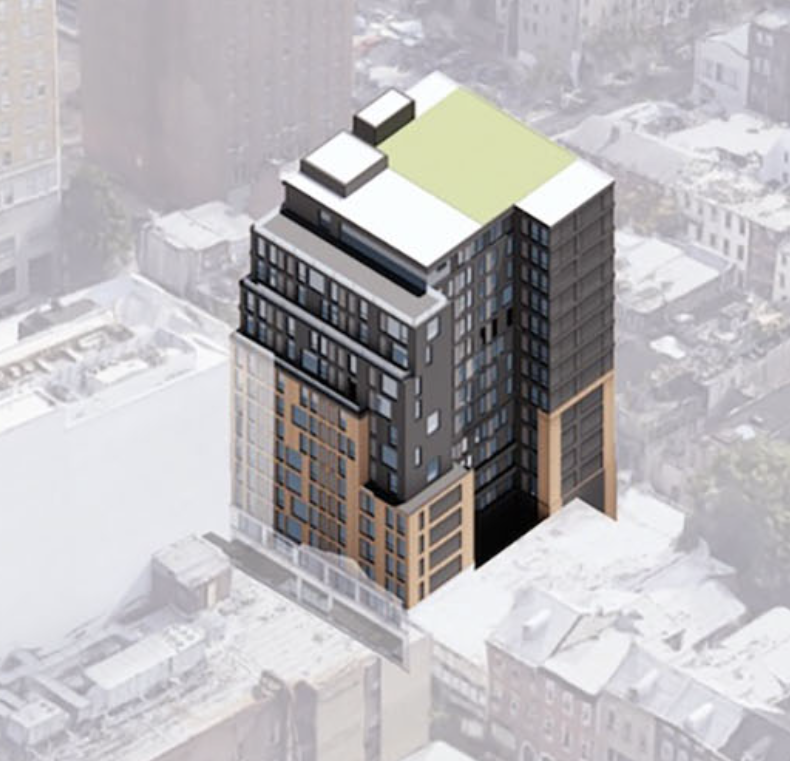
In perhaps the most meaningful project in the pipeline, the Philadelphia Housing Authority (PHA) and Alterra Property Group are partnering on a 14-story, 121-unit mixed-income tower at the site of PHA’s demolished former headquarters. This one’s been through three design iterations since 2016 — and here’s why it matters: 73 of the 121 apartments will be affordable at 60% of area median income.
Rittenhouse has always been aspirational, but this project says that living near the Square shouldn’t require a six-figure household income. Groundbreaking is targeted for Q1 2026, with first residents arriving in late 2027. We’ll continue to track the progress closely (as always!)
The Success of Office-to-Residential Conversions
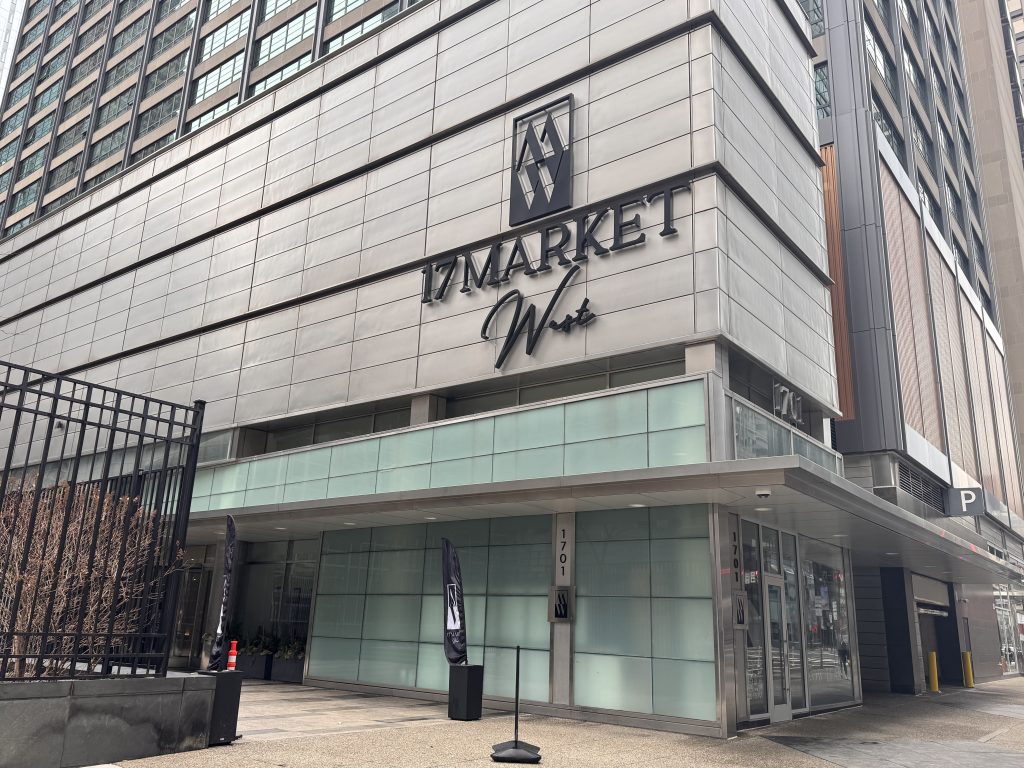

17 Market West is the recent poster child for office-to-residential conversion in Philly. Alterra Property Group completed this one in May 2025 — 299 luxury apartments in a building that’s the first in the city to offer a direct interior connection to the Suburban Station concourse. Yes, you can walk from your apartment to SEPTA in your slippers. In theory. (We’re not recommending it, but we’re not not recommending it.)
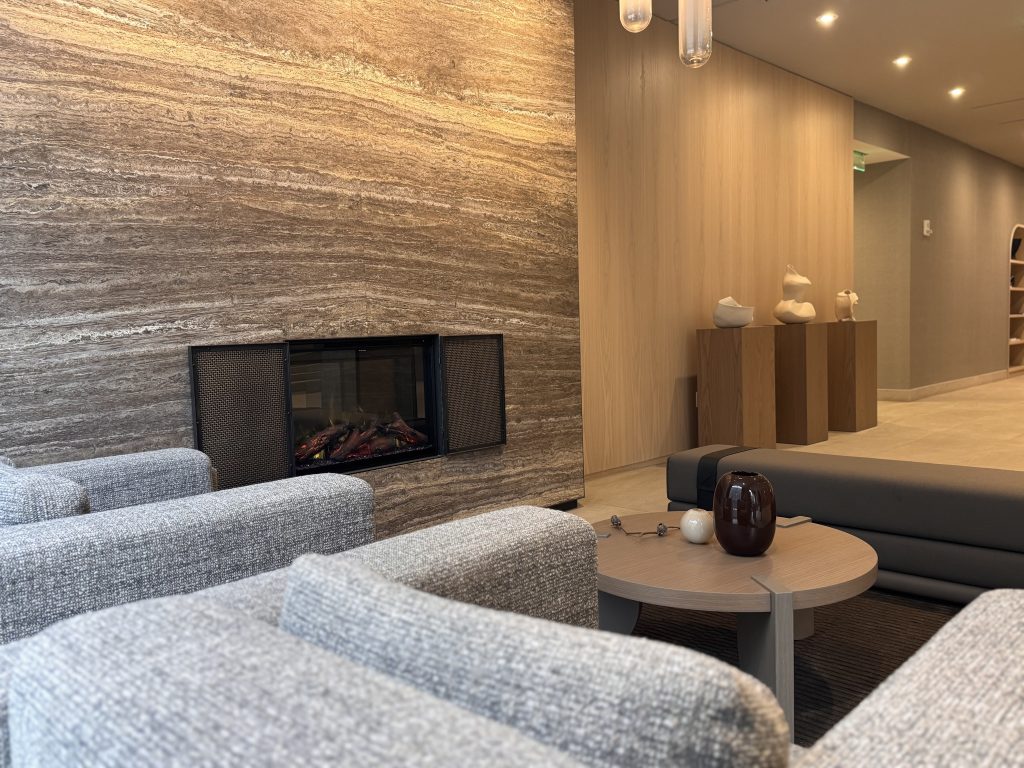

The success is opening doors — partial conversions are now proposed at Ten Penn Center (1801 Market) and 1880 JFK Boulevard.
But wait! There’s More…
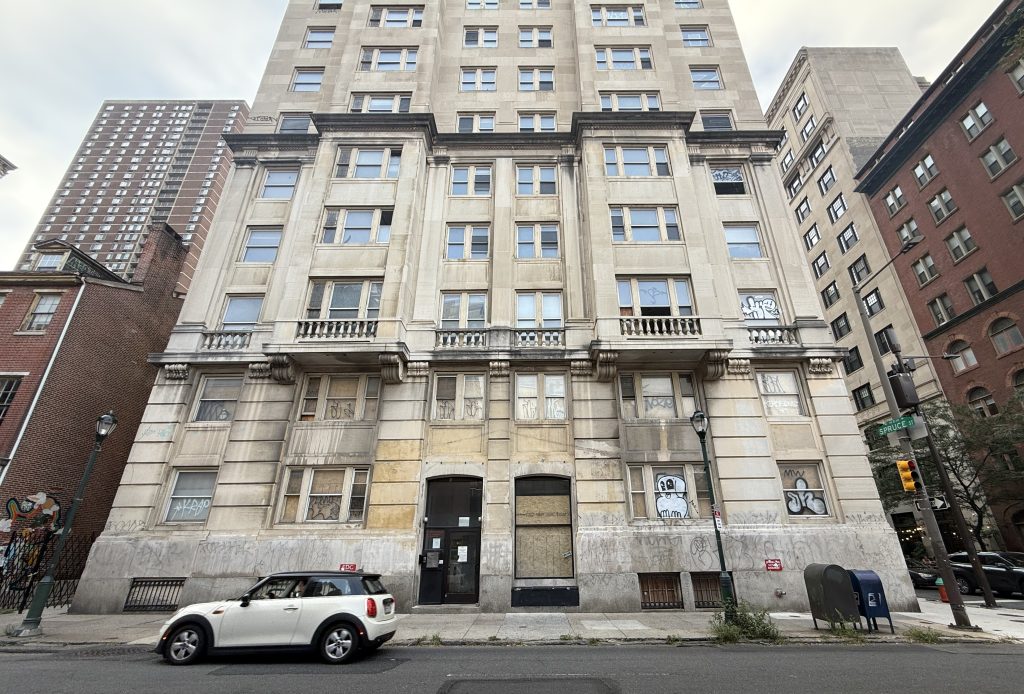
Rounding out the core: Zoria Housing acquired a long-vacant 17-story, 60-unit apartment tower at 257 16th at the corner of Spruce for $7.7 million last August. Completion is TBD and, when we last passed it, construction had not begun.

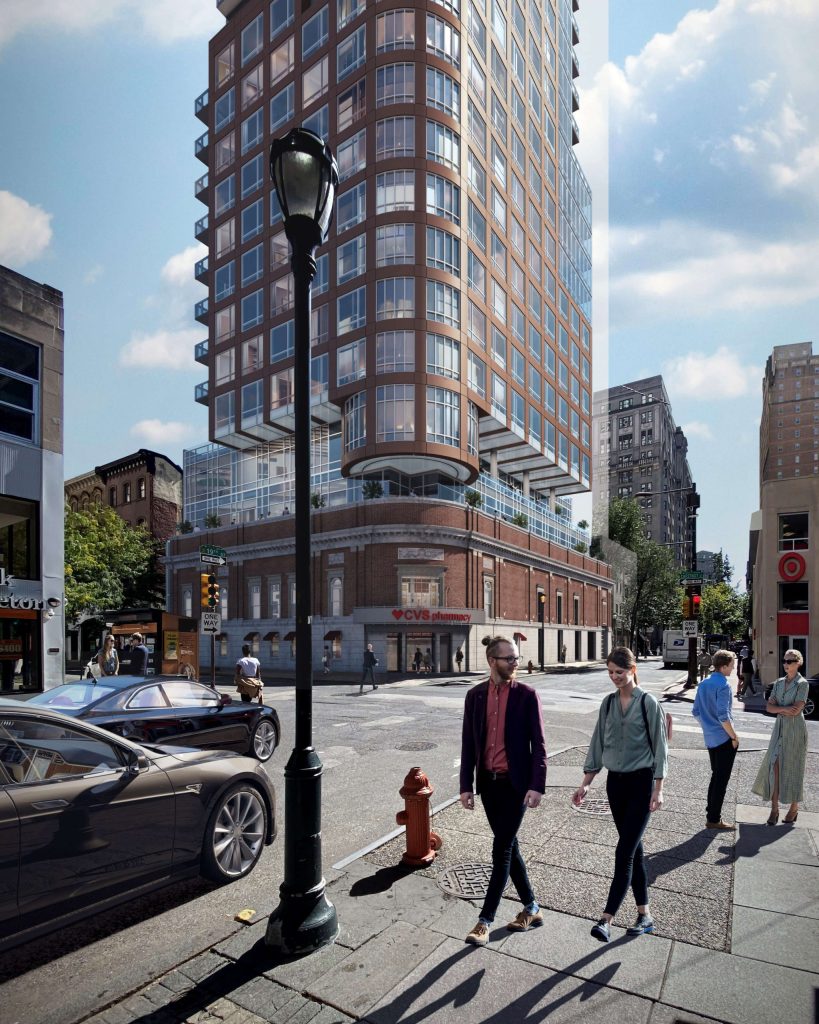
And then there’s the wild card — Goodman Properties‘ proposed a 46-story, 213-unit tower at 1826 Chestnut Street that would preserve the gorgeous 1921 Aldine Theatre facade. If built, it would stand just a block from Harper Square, creating what you might call a Rittenhouse residential supercluster. We’re thinking this stretch of Chestnut is about to become unrecognizable — in the best possible way.
The Edges Are Transforming Too
Step outside Rittenhouse’s traditional borders — to Broad Street and Market Street — and the residential wave is equally dramatic.
The Bellevue — 200 South Broad Street
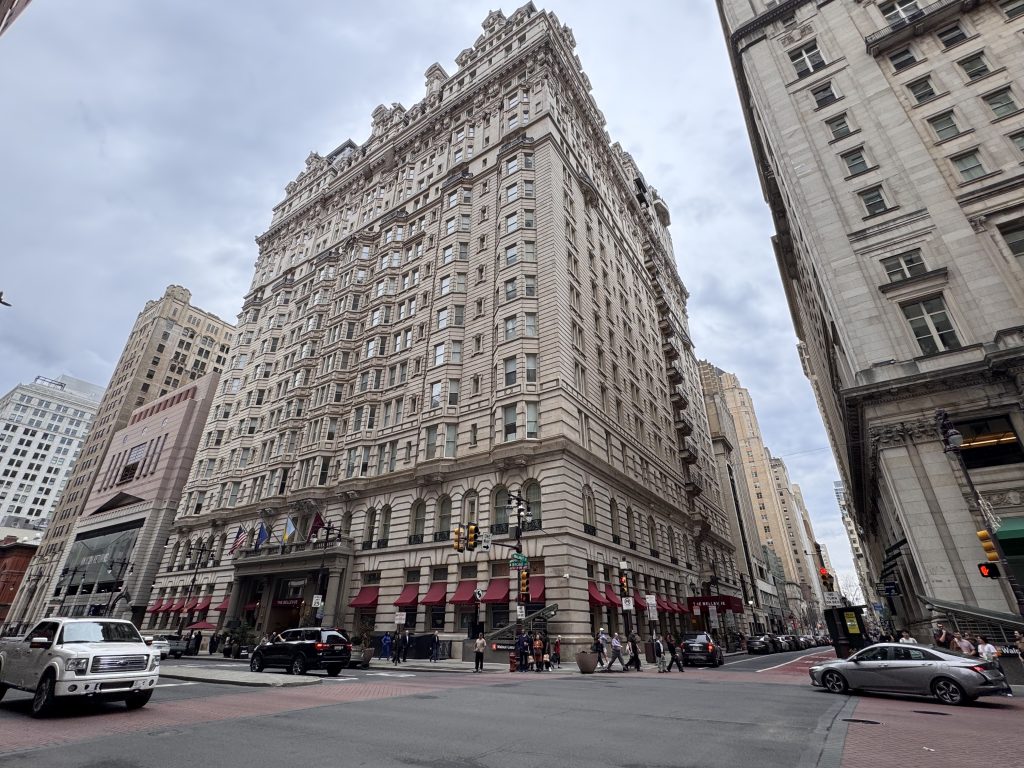
The Grand Dame herself. Built 1902-04 and now freshly renovated with 155 residential units on the upper floors, courtesy of Lubert-Adler’s $100 million renovation. Residents get included membership to the renovated 100,000-square-foot The Sporting Club with plans for a rooftop pool, bar, ice skating rink, and gardens pending. First residents moved in September 2024.
The Avenue of the Arts — Where UArts Becomes Something New
The sudden closure of the University of the Arts in 2024 released roughly 760,000 square feet across nine buildings — that’s an enormous amount of space, and the transformation is already underway.
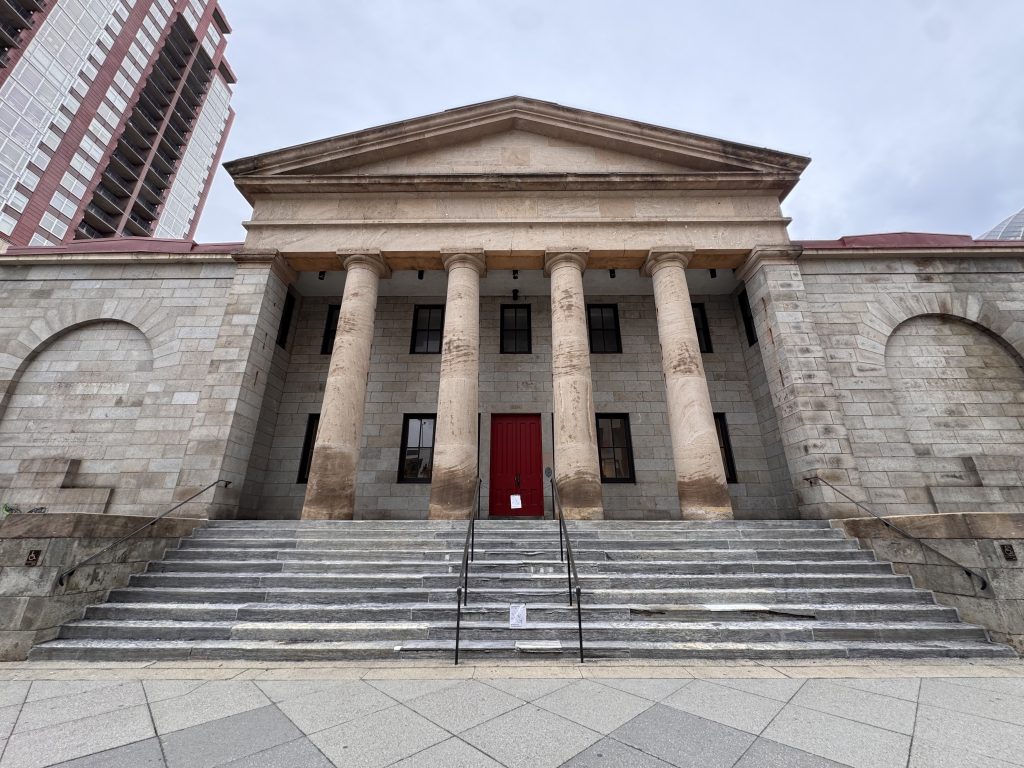
Scout’s “Village of Industry and Art” at Hamilton and Furness Halls (320 South Broad / 1451 Pine) is under construction with 45 apartments — 35 of them affordable artist housing — plus glass studios, foundries, and creative workspaces in one of the oldest surviving buildings on Broad Street. We’re talking 1826!

Carl Dranoff, who’s invested over $500 million in the Avenue of the Arts over the years, is partnering with Dwight City Group on Anderson Hall (333 South Broad, 84 market-rate apartments). And Lubert-Adler acquired Gershman Hall (401 South Broad) with plans TBD.
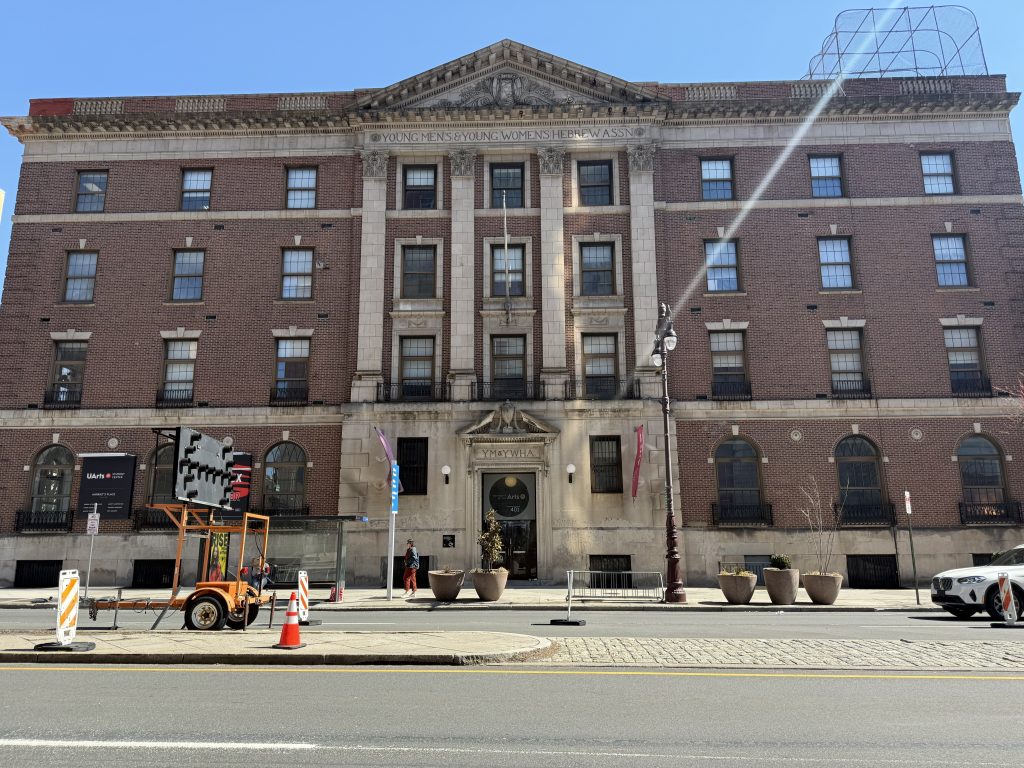
The vibe here is less luxury condo, more creative-class neighborhood in the making which is great since and that stretch of Broad Street hasn’t had this much energy in years.
Why This Is Happening — And Why Rittenhouse Already Knew

The “why” behind all of this reads like a perfect storm for residential growth — and tbh, Rittenhouse has been living this reality for a long, long, long time.
Start with remote work, which changed the math permanently. Center City has lost roughly 9.7 million square feet of office occupancy since COVID — to put that in neighborhood terms, imagine every office building you can see from the Square sitting empty. Office utilization has settled at about three-quarters of pre-pandemic levels, and nobody’s expecting a comeback. All that surplus space? It’s becoming the kind of conversion opportunity that doesn’t come around twice.
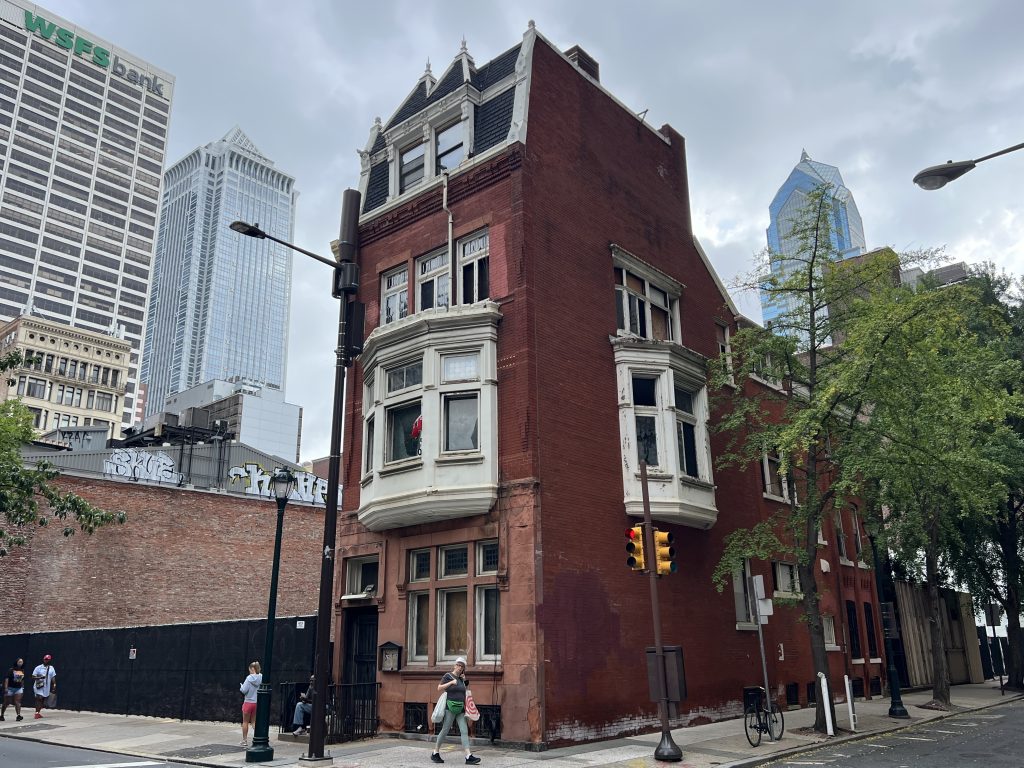
And Philadelphia is actually set up to take advantage of it. The city has converted 10 million square feet of obsolete office space to housing over the last 25 years, which is a track record most cities would love to claim.
But the demand side is the most telling part: in 2024, Center City absorbed nearly 3,000 units while fewer than 2,500 were completed. People are moving in faster than developers can build. Average rents in Philadelphia sit about 41% below the average across New York, D.C., Boston, and Chicago. That affordability gap is doing a lot of heavy lifting right now.
The Rittenhouse Principle: Rooftops First, Everything Else Follows
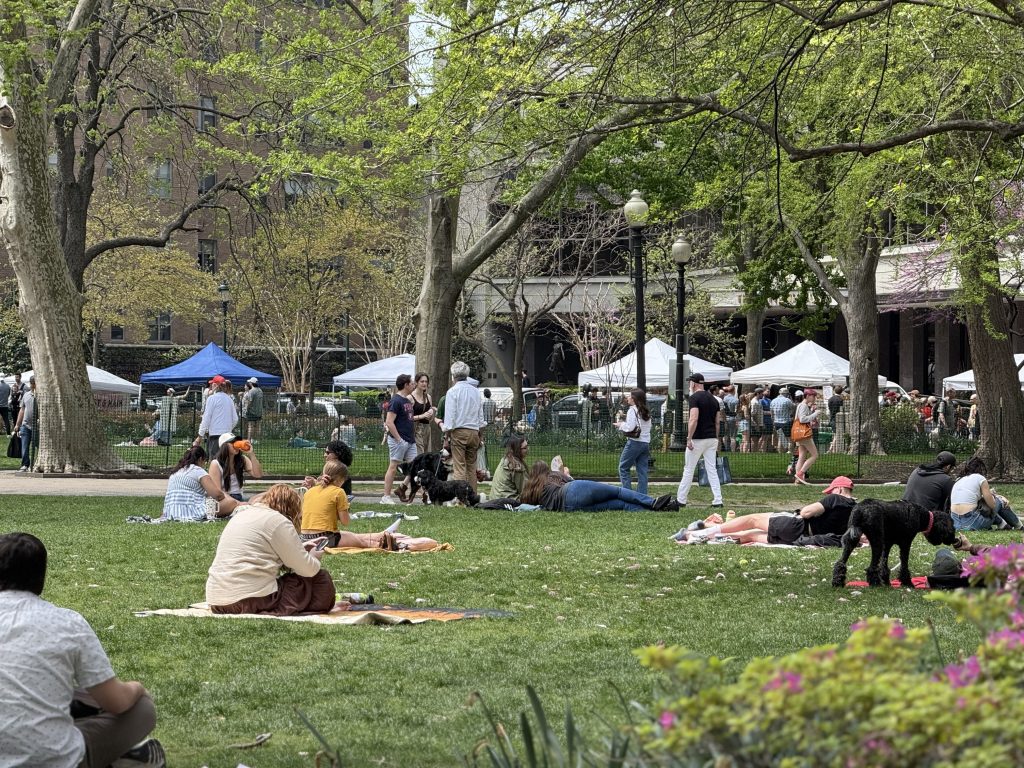
Here’s the thread that ties all of this together — and it’s the same thread that’s been running through this neighborhood since James Harper looked at an animal pasture and saw home.
The house came first. The neighborhood followed.
Every major residential project completed recently includes ground-floor retail that would never locate in a pure office district. OneThousandOne brought Giant to South Broad, Rivermark brought Sprouts, and The Josephine brought Uchi. You’re not seeing those tenants sign leases in office buildings. They follow residents. They follow rooftops.
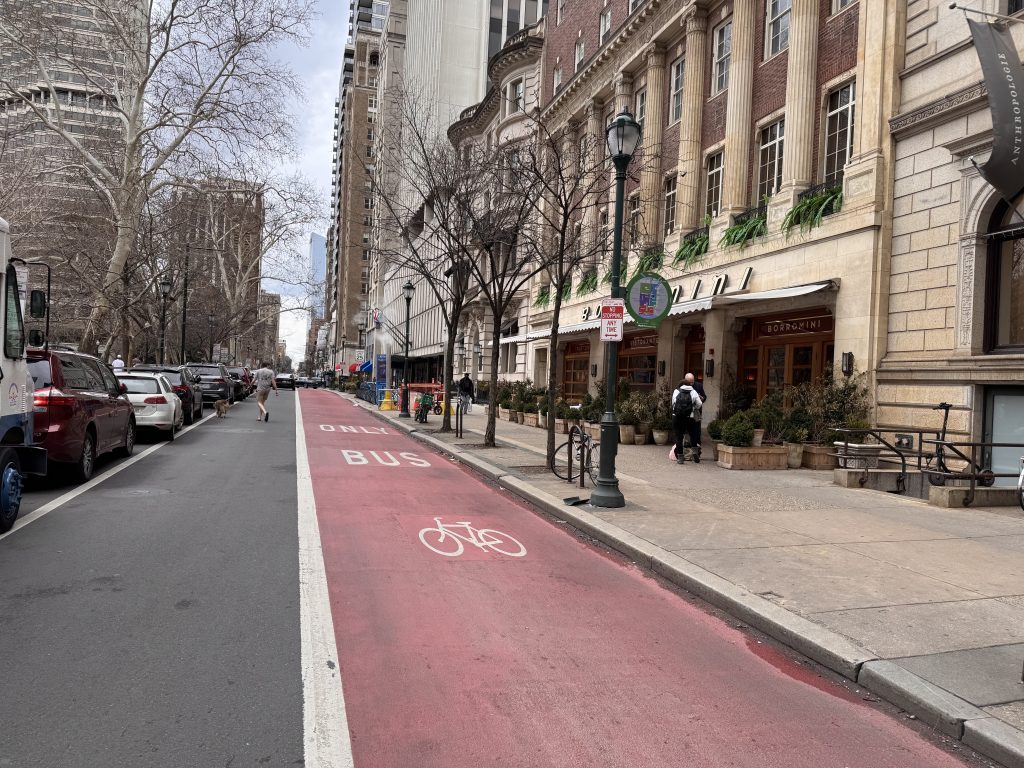
And with nearly 2,000 new apartments in the Rittenhouse pipeline and $2.14 billion in residential development reshaping all of Center City? The rest of Philadelphia is finally learning what this neighborhood has known for 186 years: build the homes, and the neighborhood follows.
James Harper figured it out in 1840. Billy the goat has been holding court ever since. And with a lot more neighbors on the way? Rittenhouse is looking pretty damn good.
See the full report here and, as always, send us your thoughts or musings at rittenhouseramblings@gmail.com!

