
Rittenhouse Gets Omakase: Inside the Kissho House Experience
Traditional Japanese counter dining arrives at 1522 Locust Street, giving diners a whole new way to experience upscale Japanese dining in the neighborhood.
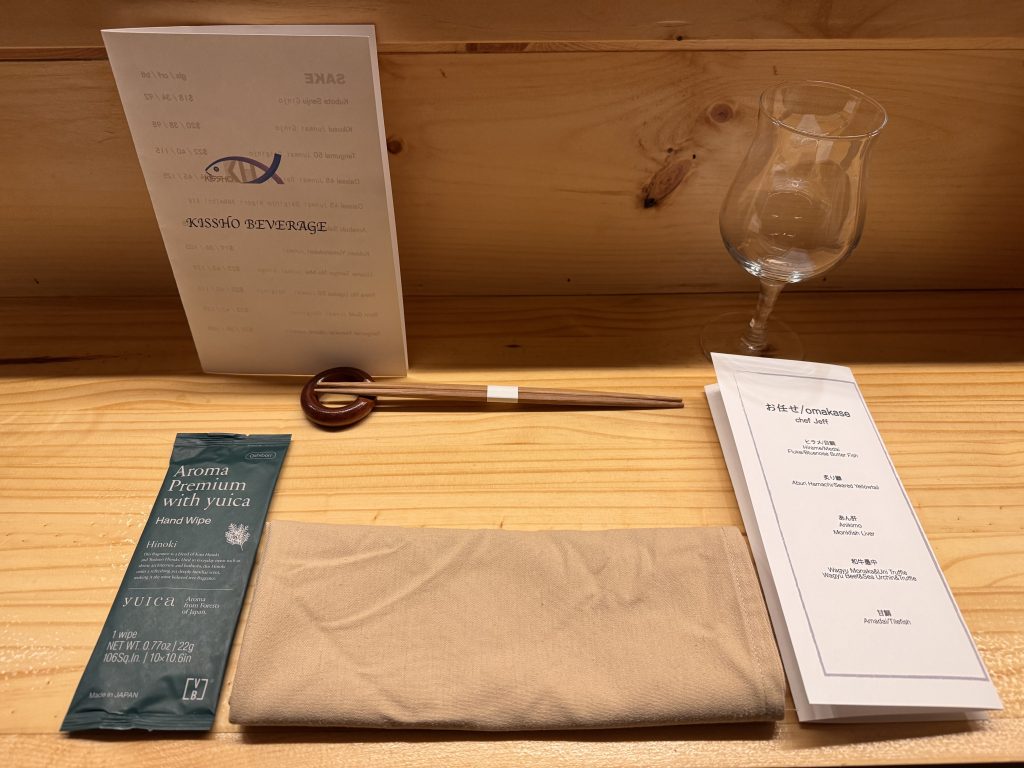
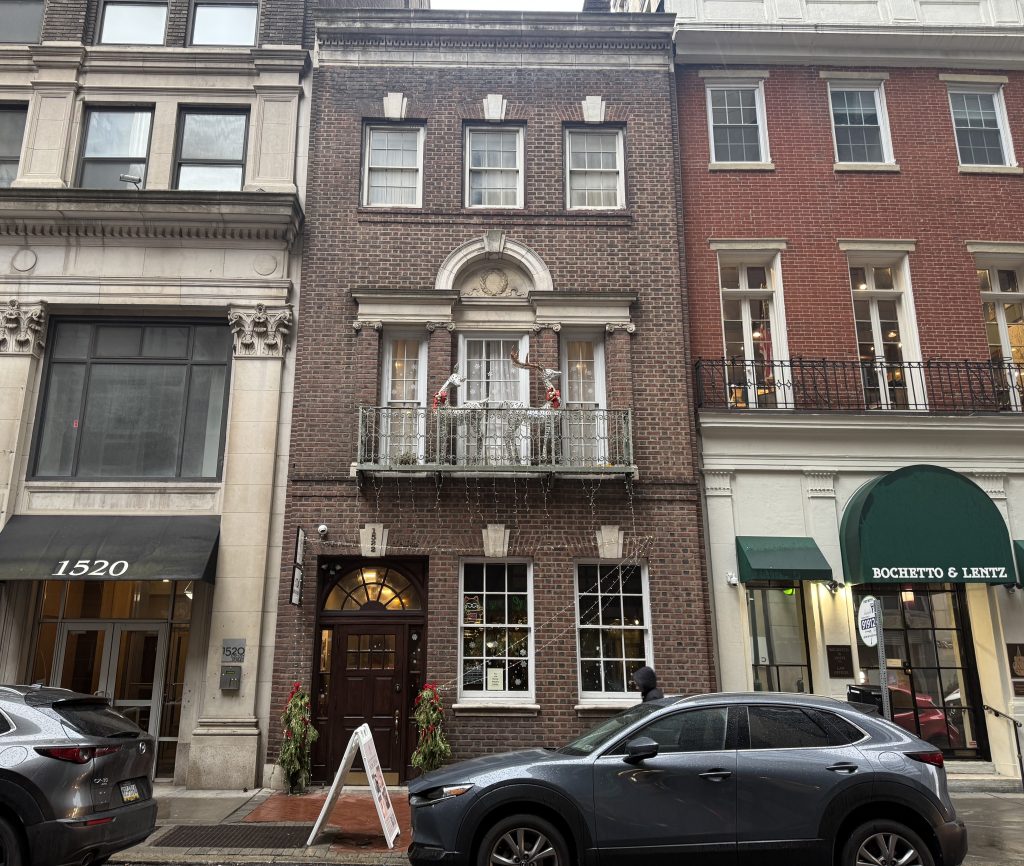
If you’ve walked past the former law-building at 1522 Locust Street and wondered what actually happens during an omakase dinner at Kissho House, you’re not alone. The word “omakase” literally translates to “I’ll leave it up to you”—which sounds equal parts exciting and slightly terrifying if you’re used to ordering off a menu.
Between the steakhouses and French bistros that define much of Rittenhouse’s upscale dining, this is something genuinely different—and honestly? It’s part cooking class, part performance art, part meditation, in the best possible way.
What Makes Omakase Different
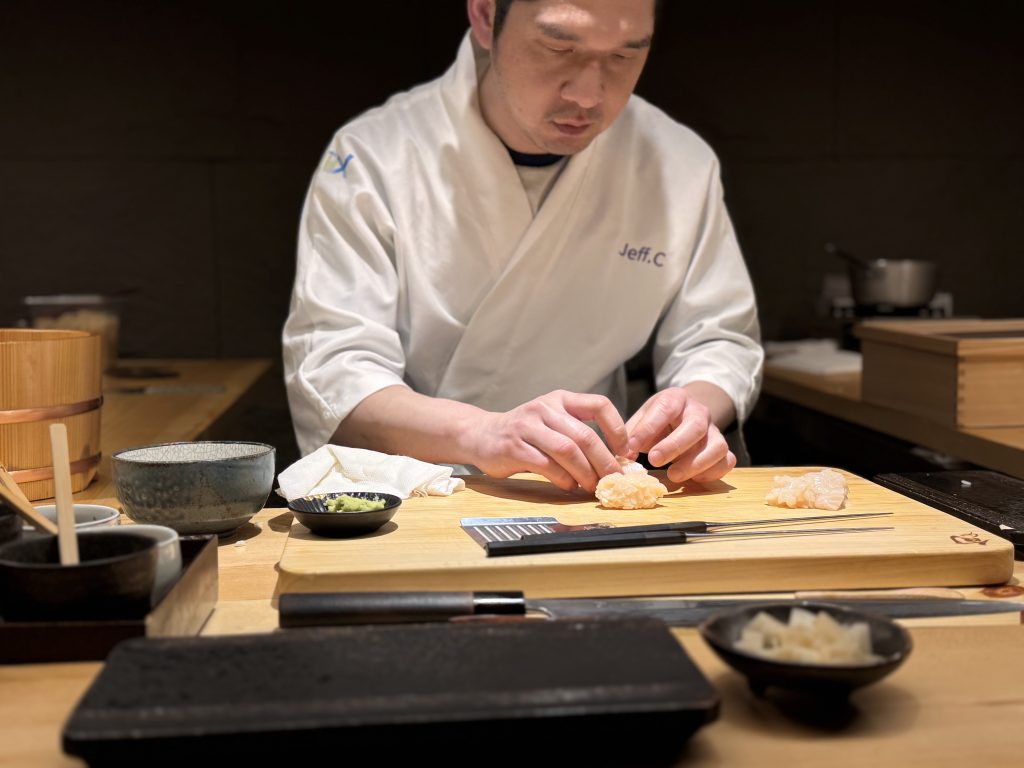
Here’s the thing about omakase: it’s not just “chef’s choice sushi.” Chef Jeff follows the traditional Japanese progression of starting with the lightest, most delicate flavors and building toward richer, more substantial courses. There’s actual logic behind it—the palate is gradually awakened throughout the meal, like a really sophisticated warm-up act before the headliner.
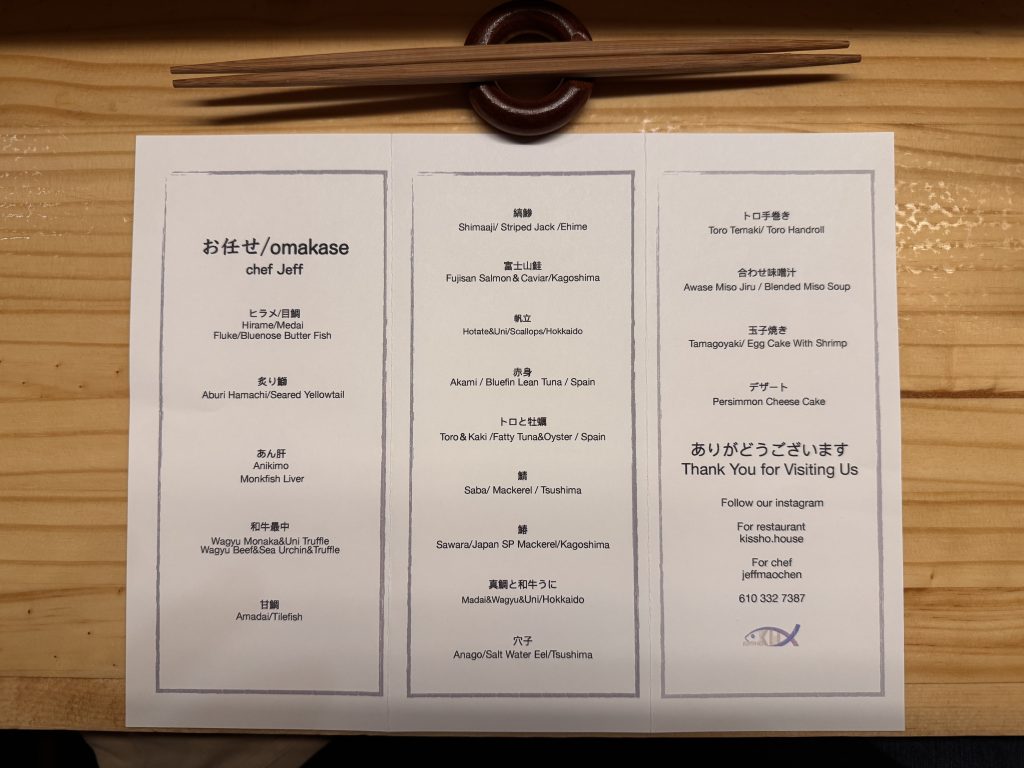
The seasonal approach means no two visits are identical. Winter brings warming preparations, spring celebrates delicate vegetables and lighter fish. Chef Jeff works with ingredients like ankkimo (monkfish liver)—flavors that some diners might be experiencing for the first time. It’s the culinary equivalent of “trust fall,” but with considerably more delicious results.
The Techniques Worth Watching
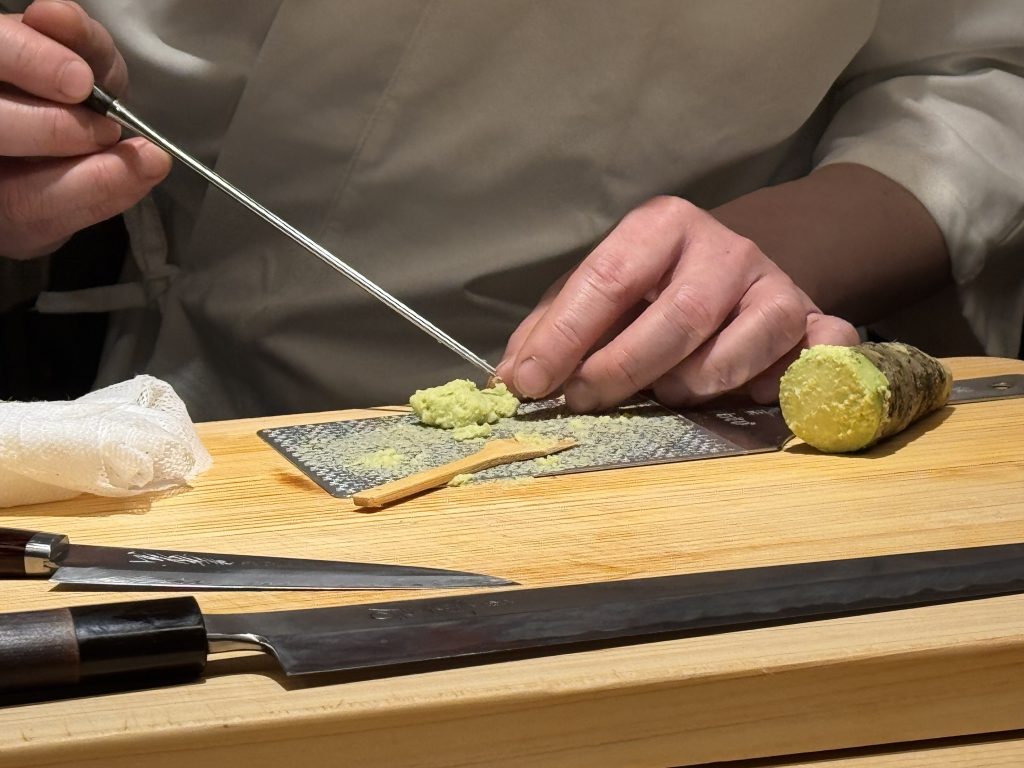
What strikes observers immediately is how deliberate everything is. Every movement has purpose. Chef Jeff isn’t rushing—he’s orchestrating. And yes, that’s fresh wasabi being grated on actual shark-skin graters, not the green paste situation familiar from other spots.
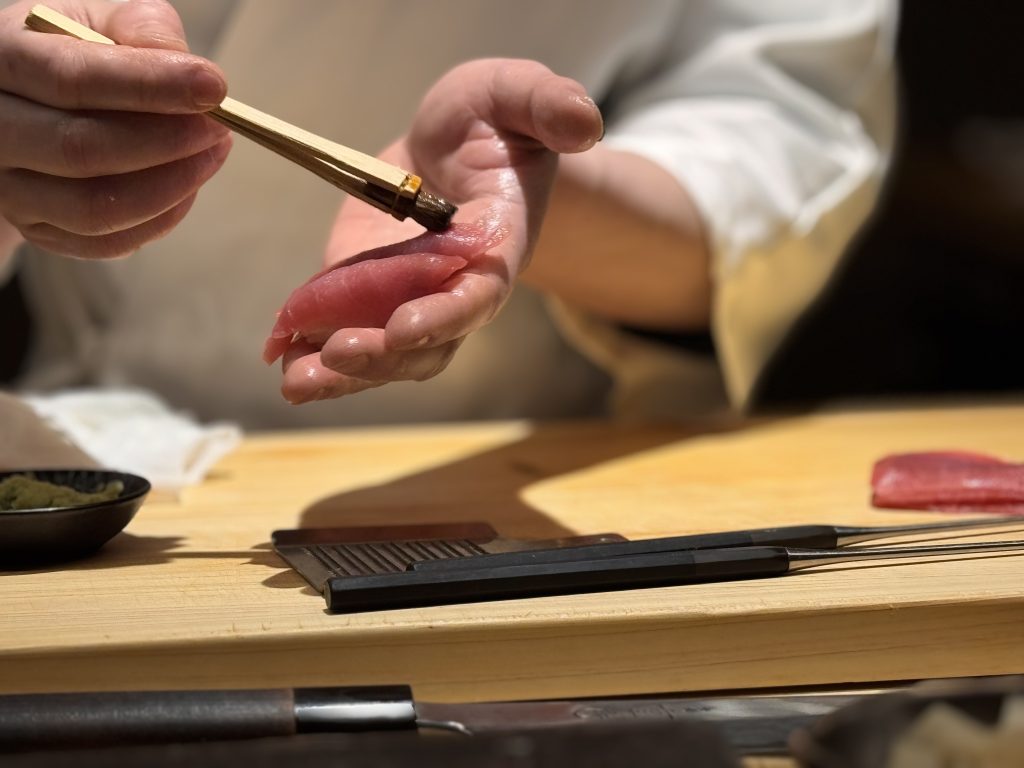
The saucing technique alone is mesmerizing to watch. Rather than generic applications, each piece of fish receives individual attention with traditional brushes. Some sauces enhance the fish’s natural flavors, others complement specific seasonal pairings. It’s incredibly methodical without ever feeling stuffy or pretentious—think Bob Ross painting happy little trees, but make it sushi.
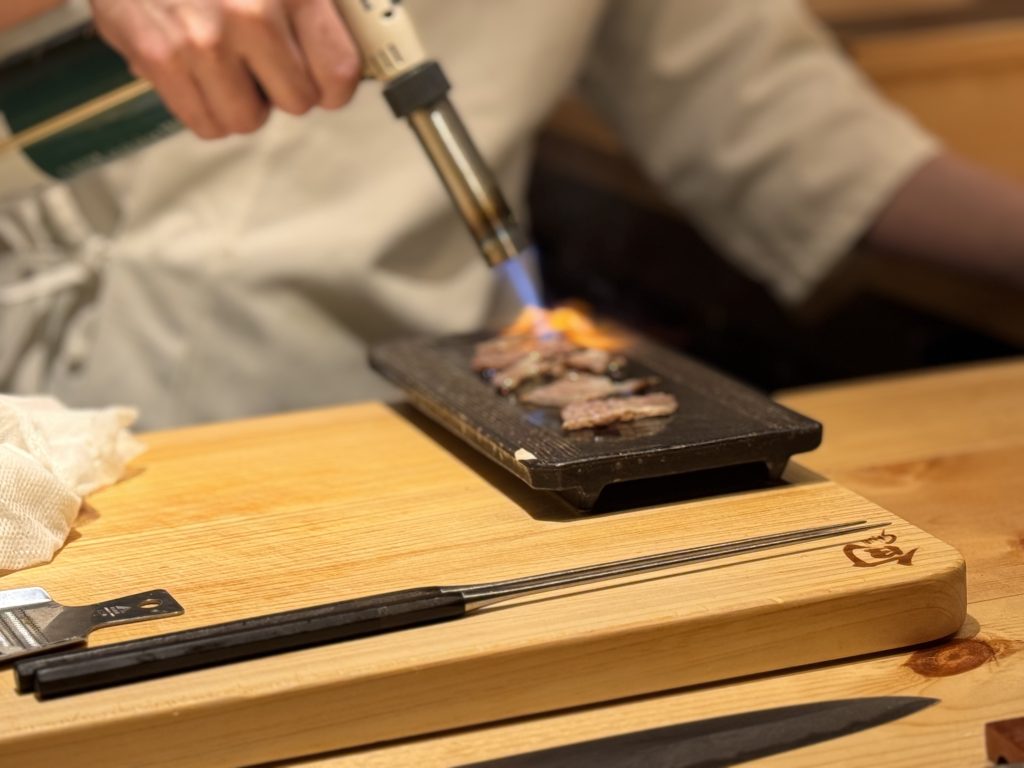
Then there’s the torching—probably the most dramatic part of the evening. That blue flame transforms textures and develops entirely new flavor profiles. It requires precise timing and intimate knowledge of how different fish respond to heat. One second too long and it’s overdone; one second too short and the mark is missed entirely.
How the Evening Unfolds

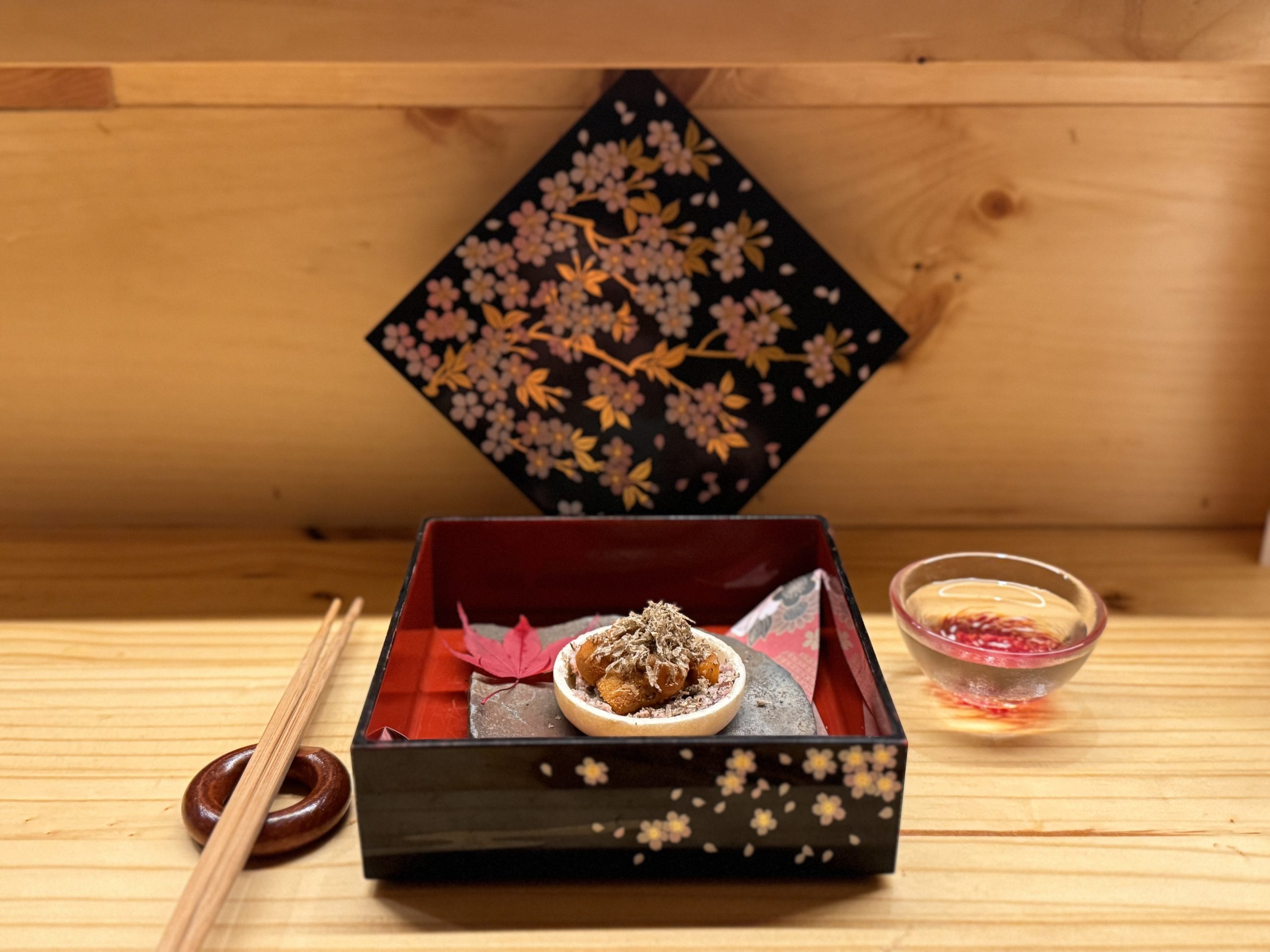
The courses arrive like chapters in a story diners didn’t know they needed to hear. Early presentations might include delicate tofu preparations or light sashimi courses, each served on handmade ceramics chosen specifically to complement what’s on them.
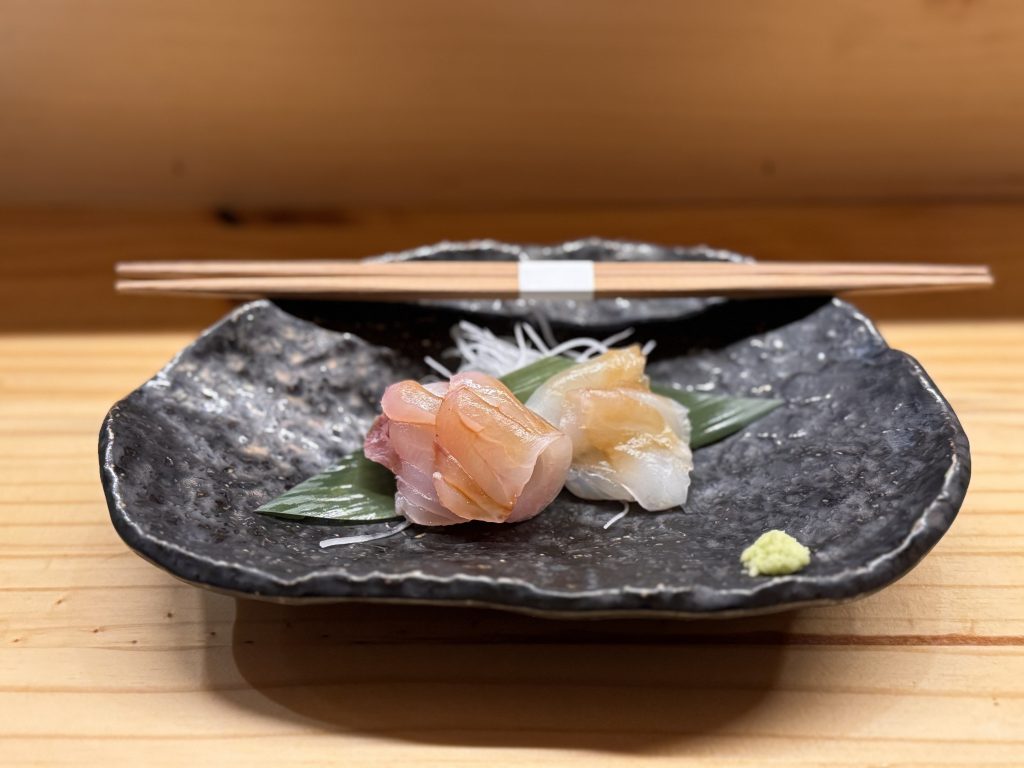
And yes, the ceramics deserve their own shoutout. These aren’t generic restaurant plates—they’re carefully selected vessels that frame each course like individual works of art. The rough textures of black slate against pristine fish, delicate bowls cradling complex preparations. It’s giving “every course is Instagram-worthy” without trying too hard.
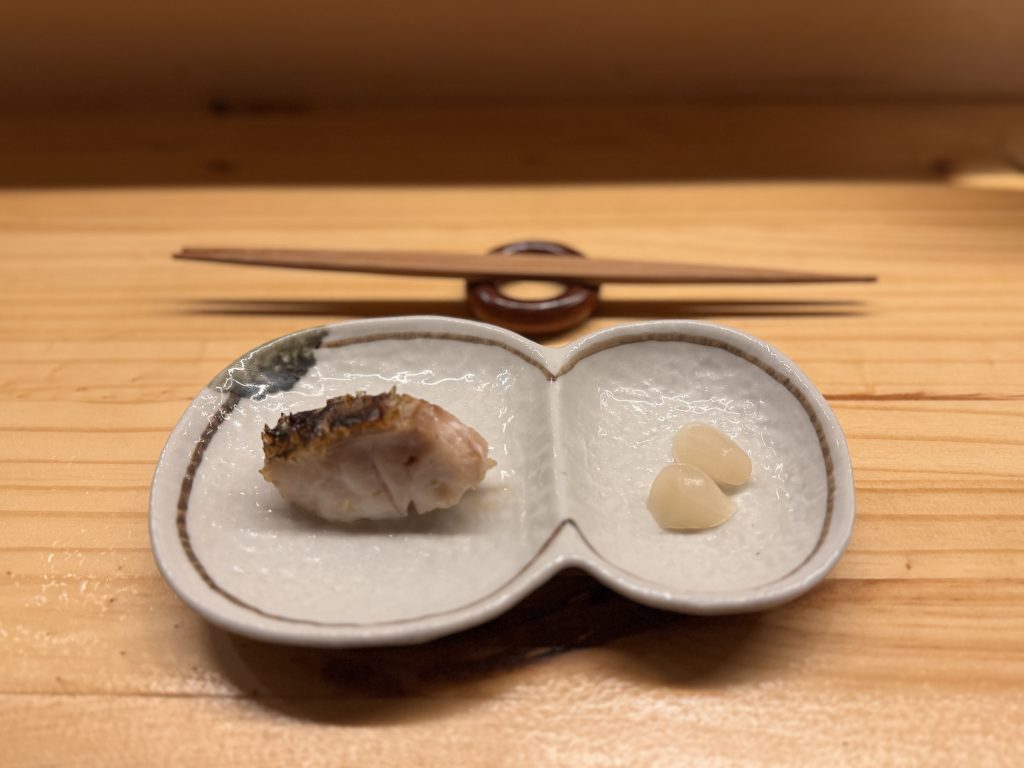
As the meal progresses toward heartier preparations, the logic behind the sequencing becomes clear. Palates have been prepared for the richer flavors that come later—the fatty tuna, the more complex seasonings and pairings. It’s like a really well-planned party playlist, but for taste buds.
When Diners Become Part of the Show
One of the most engaging aspects? Certain courses are meant to be interactive. The temaki (hand roll) arrives warm in guests’ hands, meant to be eaten immediately while the nori is still crisp. Chef Jeff explains the proper technique—this isn’t casual finger food in the burrito sense, but a carefully orchestrated experience of temperature, texture, and timing.

Throughout the meal, Chef Jeff shares insights about ingredients, techniques, and the reasoning behind particular pairings. It’s educational without being lecture-y, informative without disrupting the meditative quality of watching the preparation. Think of it as the cooking show guests didn’t know they had tickets to.

The Setting That Makes It Work
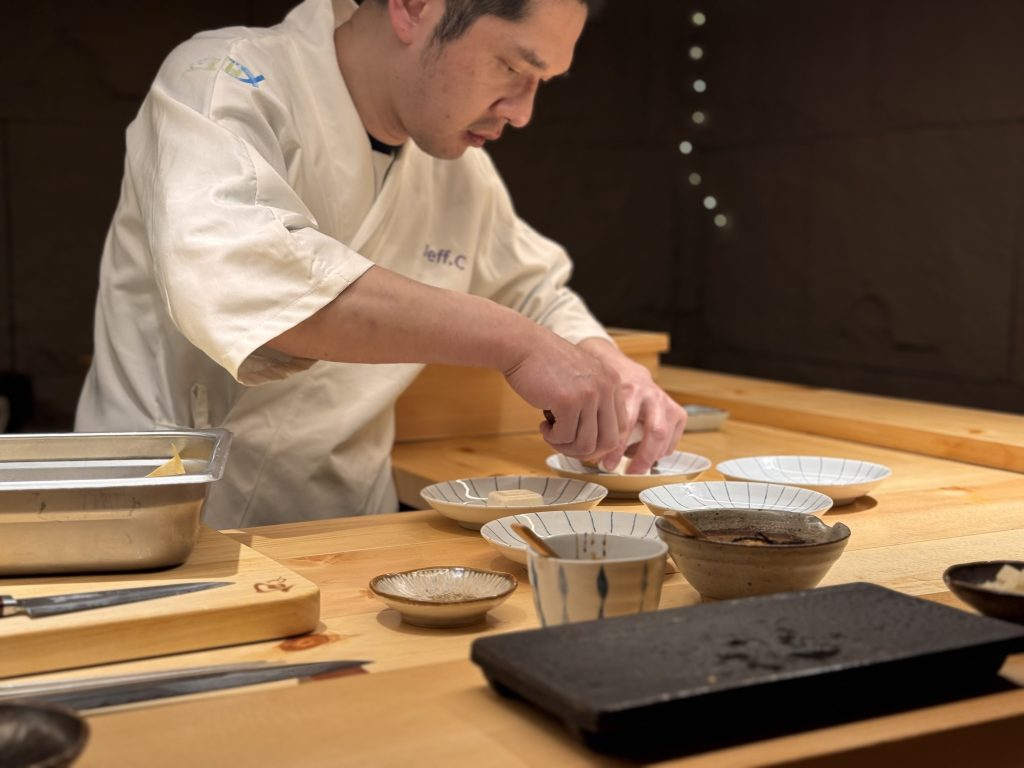
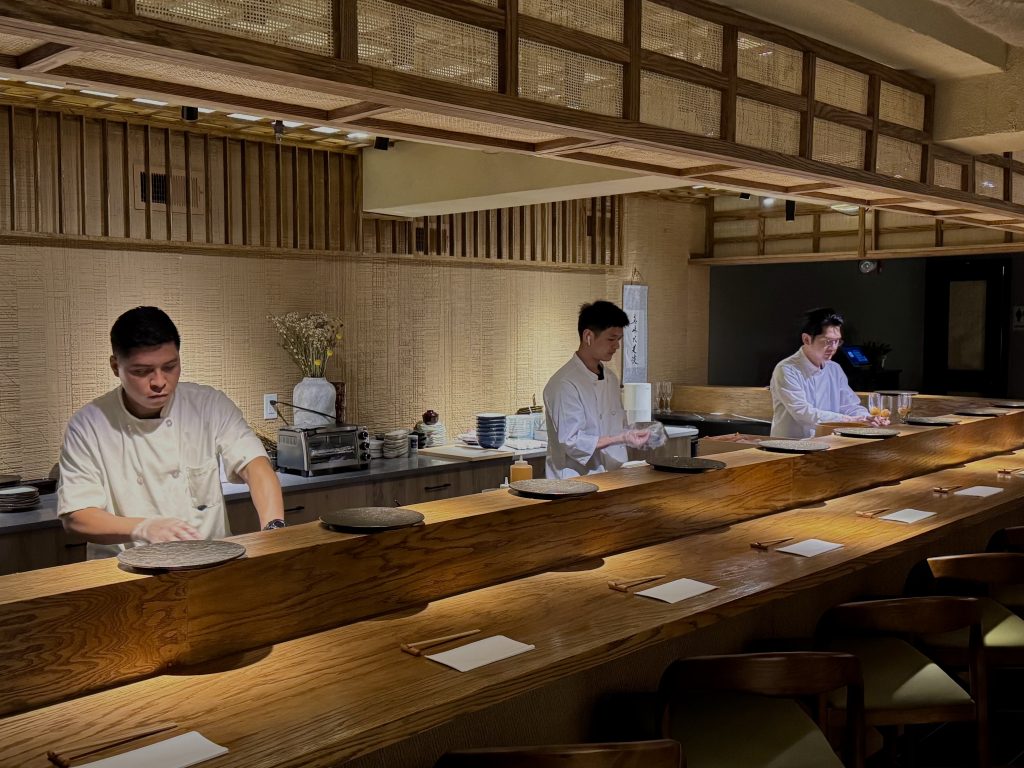
The counter seating creates genuine intimacy—diners aren’t watching a performance from the cheap seats. They’re in the front row, participating in a collaborative experience. The warm wood tones and minimal lighting keep attention focused on the food and technique without the distraction of checking phones every five minutes (though honestly, the temptation disappears pretty quickly).
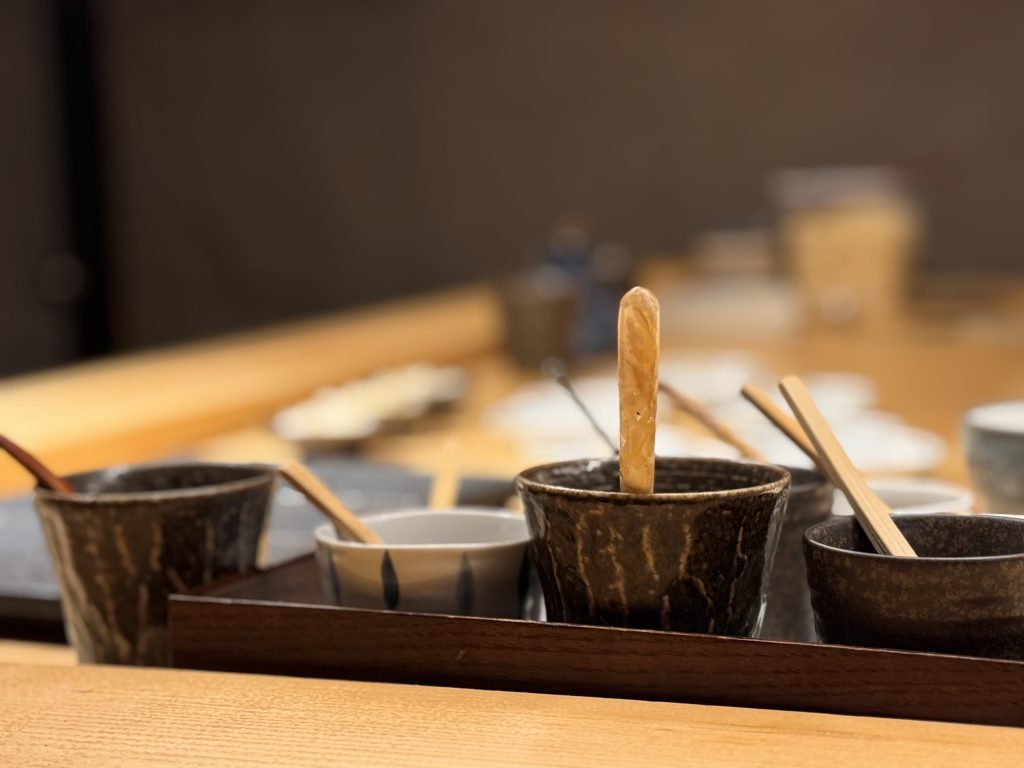
Even the smallest details reflect intentionality. Traditional wooden implements, carefully selected ceramics, the precise arrangement of tools—everything serves the larger purpose of creating an authentic omakase experience right here on Locust Street.
Beyond the Food

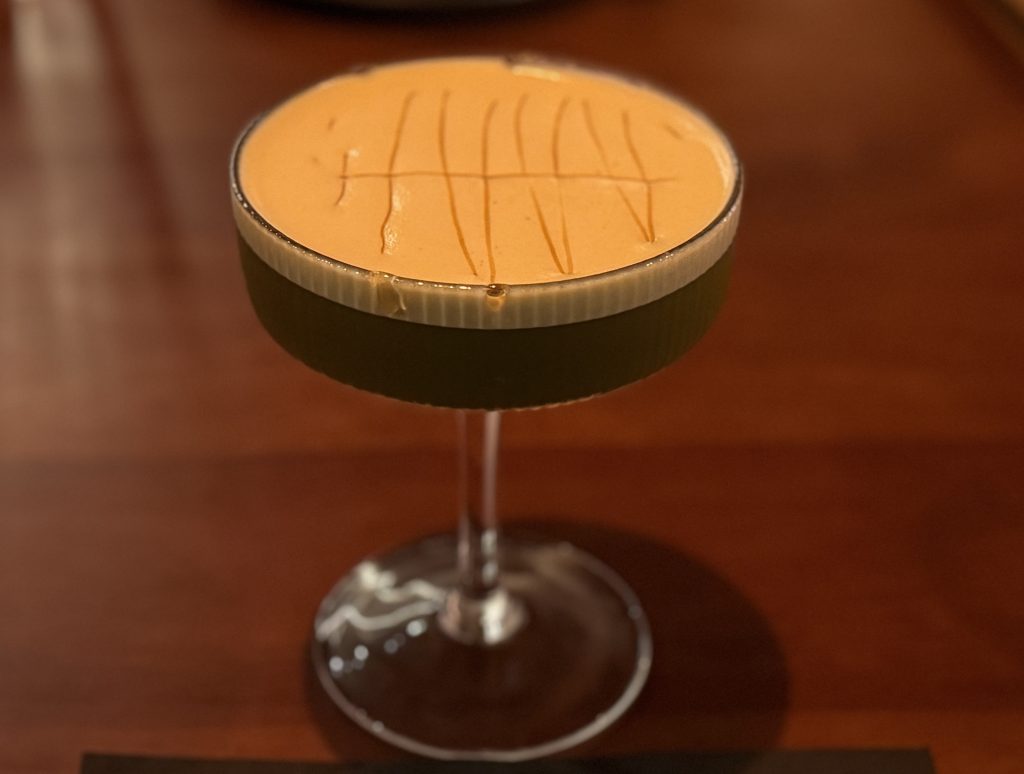
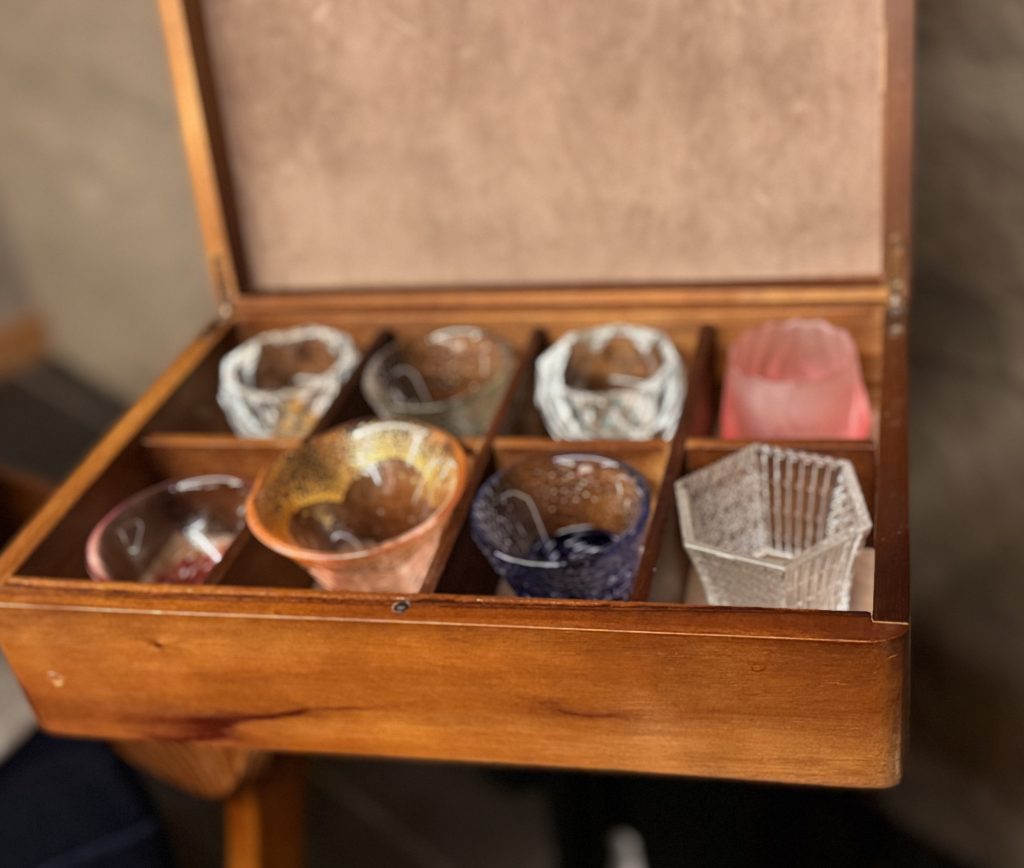
The beverage program complements rather than competes with the food. Thoughtfully crafted cocktails and sake selections are available; when the omakase assistant brings you sake they also offer you the glass of your choice that feels integral to the overall experience.
What This Adds to the Neighborhood
For fellow Ramblers curious about omakase but perhaps intimidated by the unknown (understandable—trusting someone else to pick an entire meal can feel vulnerable), Chef Jeff’s approach is both welcoming and educational. Diners leave understanding not just what they ate, but why it was prepared and presented as it was.
This level of culinary artistry adds something genuinely different to the neighborhood’s dining landscape. Between the classic American steakhouses, Italian trattorias, and French bistros that anchor Rittenhouse’s upscale dining scene, Kissho House offers an entirely different experience—it’s about the preservation and presentation of traditional Japanese techniques in an authentic, respectful way. Plus, the intimate counter setting creates a different kind of experience, and Rittenhouse is all the more interesting for it.
The Practical Details
📍Location: 1522 Locust Street, Rittenhouse Square, Philadelphia
👉 Reservations: Necessary—book through Resy or call directly. The intimate counter means limited seating!
📝 What to Expect:
- Duration: Plan for 1.5-2 hours
- Format: Prix fixe omakase (check their website for current pricing)
- Dress Code: Smart casual works perfectly
- Best For: Date nights, special occasions, adventurous eaters ready to trust the process; note they are able to accommodate gluten-free and dairy preferences.

